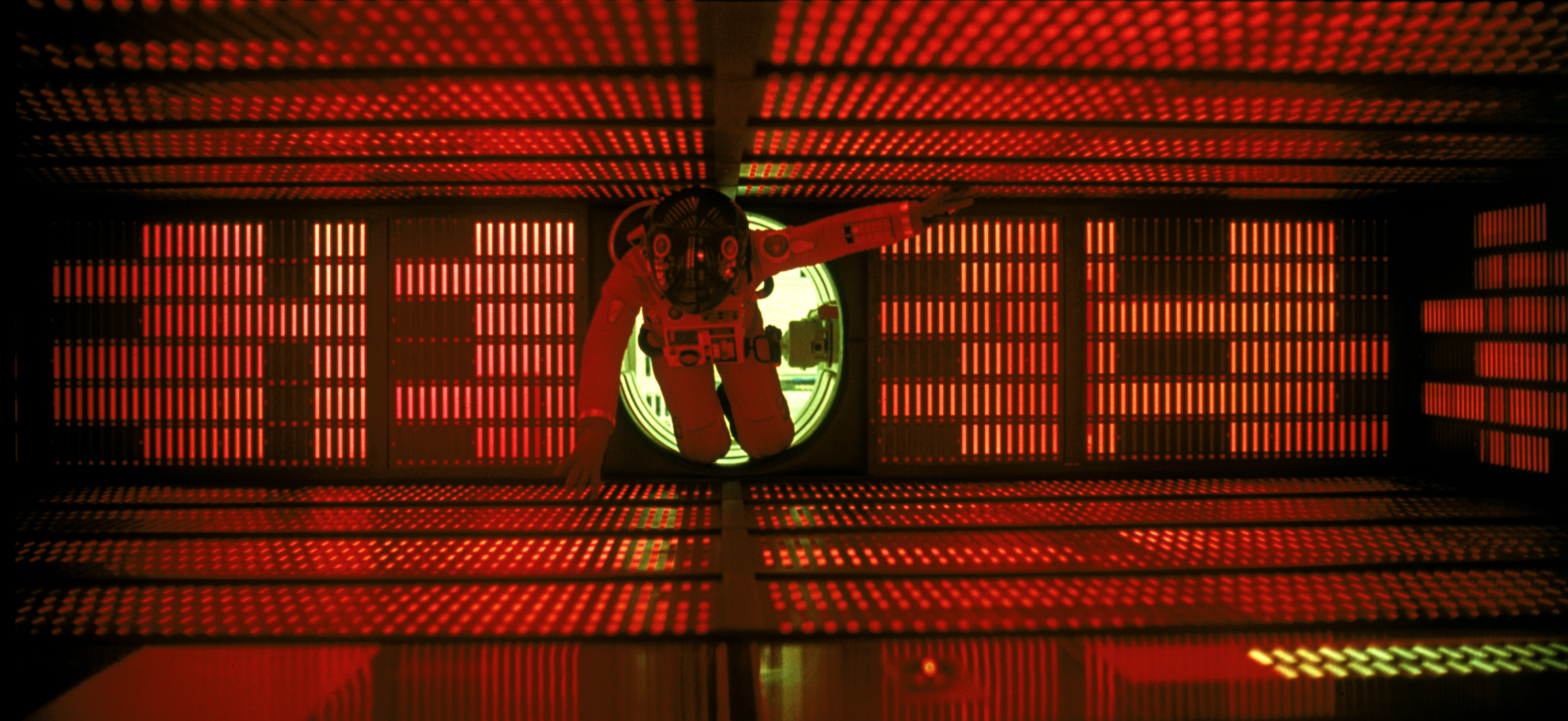
Many eminent filmmakers and critics consider that 2001 A Space Odyssey as the best sci-fi film of all time. Even after 49 years of its release, no other movie was successful in matching this classic in creating visual wonders. In the 21st century, our film making is completely depended upon 3D technology, Green screen, Blue Screen, and VFX. What makes this Stanley Kubrick's modern marvel unique is its innovative use of resources.
The special effects in 2001 were executed without the benefits of CG. These brilliant effects were achieved with a mix of creative camera work, dedication towards the project, experiments and hard work. Let us have a look at the lessons which can be observed from this film.
Lesson Number 1: Bigger the idea, Bigger the execution
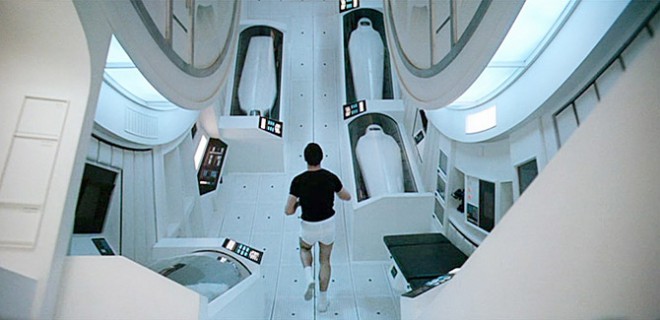
Making this film it costs around $10.5 million for MGM pictures of which $6.5 million spent on special effects. Stanley Kubrick invited Frederick Ordway who had worked in NASA, made him as in-charge for the concept and design of the space crafts. For the shots inside the Discovery space ship, they filmed using a rotating set with all lights and cameras attached to the rotating assembly. Kubrick also placed a 30-ton rotating Ferris wheel at a cost of $750k. The lesson for the amateur and beginners is that don't impose limitations for ideas and execution as they seal the fate of the project
Lesson Number 2: Create your own style of working
Stanley Kubrick created his own signature style in movies. Whether it is black comedy Lolita(1962) or gigantic Spartacus (1960), his style of working is clearly visible. He mainly uses three structured narrative Beginning-Middle-End and 2001 is clearly made in this format. It begins with the evolution, continues as exploration and ends with discovery. The lesson to be observed here is by following one's path makes you a follower, Creating your own path makes you a leader.
Lesson Number 3: Research the topic
Before launching the production of the film officially, Stanley and his team of writers thought about and researched the prospects of space travel and its future, rather than just imagining and creating a new storyline. His analysis about how the space program would look like and what life in a distant space would resemble aptly matches the real space program. Stuff like video chat, portable devices that store the work and Artificial Intelligence were used in this movie, which became a reality after 40 years. The lesson we need to learn here is the more you involve and research the more perfect you become.
Lesson Number 4: Visual is more Impactful than a Dialogue
2001 A Space Odyssey is considered to be one of the best visual epics in the world cinema. It achieved an Academy Award for the Best Special Visual Effects in 1968. With the help of innovative techniques, trick camera movements and huge composition shots and the introduction of new methods the movie changed the way of thinking and creating scenes. In the total duration of 161 minutes the dialogues appear about 50% of the duration, it is only the visuals that created the required effect. The floating pen sequence or the total ape-man scene or the final evolution sequence are pretty much hard in a verbal format, but with the camera and striking bgm has made those scenes memorable forever. Lessons we need to learn here is differentiating Visual and Dialogue, the directors should not rely too much on dialogues to explain a simple image or scene can serve better effect.
Lesson Number 5: How to draw a conclusion
Many filmmakers falter during the conclusion, in order to provide satisfaction for the viewers they tend to choose between happy or sad formats that were irrelevant to the theme of the film. But for 2001, it's ending is still talked about and debated from the past half a century. It allows the audience to interpret on their own. The film is highly ambiguous and the monolith which occurs at the end of the Jupiter Mission segment its origin and purpose still a mystery leaves the audience to think about it and draw their own conclusion. The lesson we learn from this is that the conclusion should reflect the theme of the whole movie and sometimes the abrupt ending is better than extended ones.
So, these are the lessons from Stanley Kubrick's epic blockbuster 2001: A Space Odyssey that can help, motivate beginners in Filmmaking in creating the best quality films.
Comments
Post a Comment